
Manufacturing
How to Choose an Oral Strip Manufacturer: A Practical Buyer’s Guide
Choosing an oral strip manufacturer re…
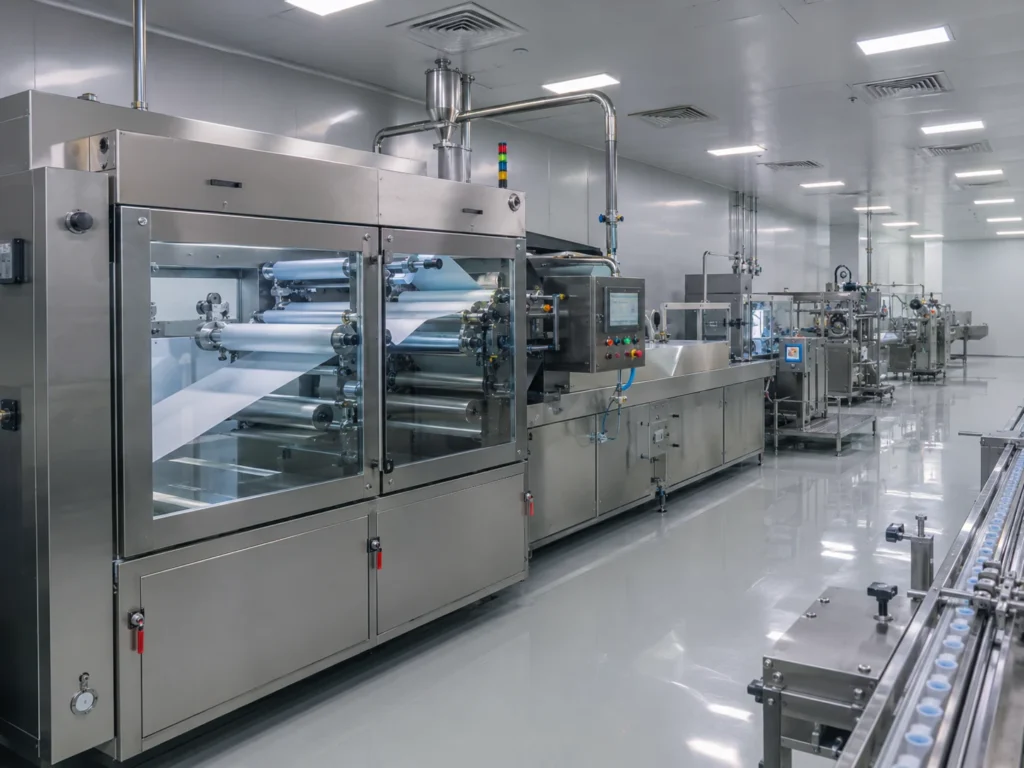
Choosing an oral strip manufacturer starts with one question: can the supplier turn your formula idea into a stable, acceptable film that can be produced and packed consistently? A strong partner should evaluate active-ingredient load, solubility or dispersion, taste, film thickness, dissolution, packaging protection and target-market requirements before confirming a commercial plan. Buyers should compare the proposed manufacturing route, sample process, quality documents, MOQ structure and scale-up controls—not unit price alone. This guide provides a practical framework for screening suppliers and preparing a more useful request for quotation.
Written by the Shengmei Manufacturing Team. Technical review by Shengmei’s oral film formulation and production team.
Table of Contents
- Define the project before comparing suppliers
- Check oral-film formulation capability
- Evaluate samples like a production buyer
- Review manufacturing and scale-up controls
- Match packaging to the film and sales channel
- Compare quality documentation carefully
- Understand MOQ, lead time and quotation scope
- Use a supplier comparison scorecard
- Questions to ask an oral strip manufacturer
- Frequently asked questions
1. Define the Project Before Comparing Suppliers
Manufacturers cannot assess feasibility from a product name alone. “Energy strip,” “sleep strip” or “beauty strip” describes a commercial direction, but not the specification that determines whether the film can be made.
Prepare a short brief that covers:
- target country or region;
- intended product category and sales channel;
- preferred active ingredients and dose per strip;
- desired flavour, sweetness and cooling profile;
- expected strip count per retail pack;
- preferred individual sachet and secondary packaging;
- estimated first-order and repeat-order quantities;
- target launch timing;
- required documents or tests;
- whether you want an existing formula, a modified formula or full custom development.
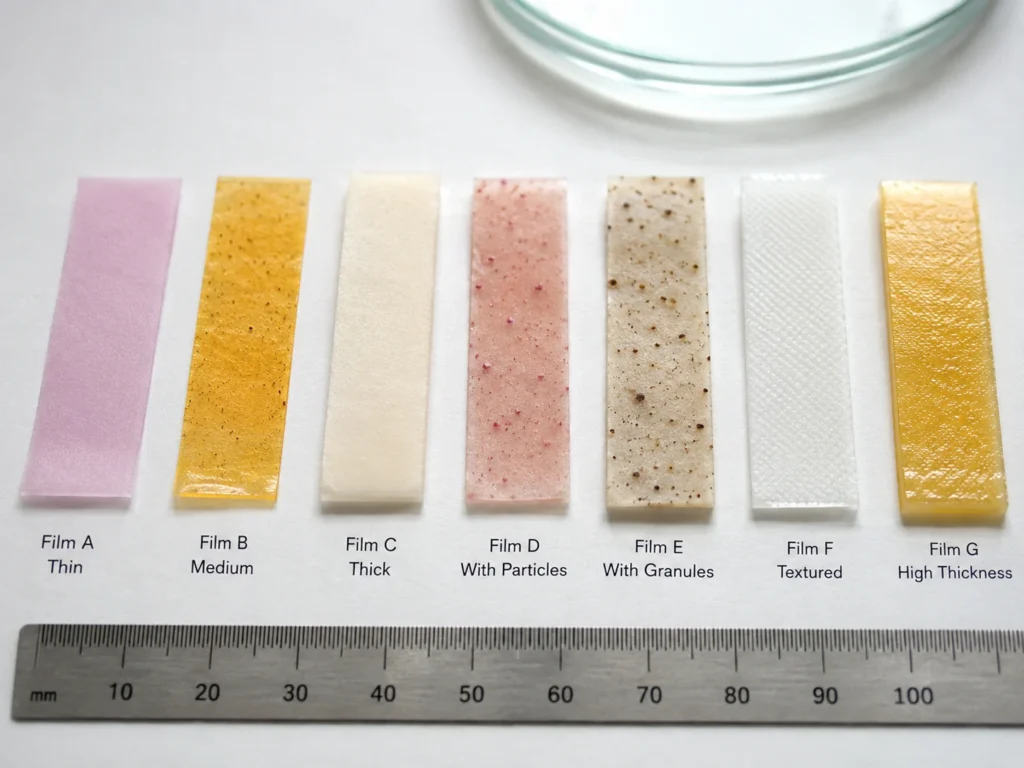
This information helps the manufacturer identify conflicts early. A high ingredient load may create a thick or slow-dissolving film. Poorly soluble botanical powders may remain visible or settle during processing. Bitter or strongly coloured ingredients can affect both flavour and appearance. These are formulation trade-offs, not details to postpone until after the quote.
Brands still comparing delivery formats can first compare supplement dosage forms. If the project is already committed to strips, review our practical oral strip manufacturing capabilities.
2. Check Oral-Strip Formulation Capability
Oral dissolving films are not simply compressed tablets made thinner. The active system, film-forming matrix, plasticisation, flavour system and processing conditions must work together to produce a flexible film that can be cut, handled and sealed.
A capable manufacturer should review at least five areas.
Active load and compatibility
Ask whether the proposed active dose is realistic for the target strip size and consumer experience. The manufacturer should be willing to discuss alternatives when the initial load would make the film too thick, brittle, gritty or slow to dissolve.
Shengmei’s practical working reference
For many Shengmei custom supplement-strip projects, a 42 × 22 mm strip with a working target of about 350 mg provides a useful starting point. A project may be evaluated up to about 400 mg per strip, but the additional load can increase film thickness and slow dissolution. A common development target is approximately 30–40 seconds, while the non-active portion may require roughly 120–150 mg to build the film matrix, flavour and mouthfeel.
These figures are manufacturing references, not universal finished-product specifications. The final strip weight, active load and dissolution target must be confirmed after the complete formula has been reviewed and sampled.
Solubility, dispersion and sedimentation
Not every ingredient needs to dissolve completely, but an insoluble ingredient must remain acceptably dispersed. In Shengmei sample development, low-solubility botanicals such as apigenin may leave visible particles. Lemon balm can introduce brown particles or a darker film colour, while a high L-theanine load may increase the risk of sedimentation. These observations do not automatically make a formula unsuitable, but they can require a lower load, a different raw-material specification or a revised strip and flavour system.
Film structure
The selected film-forming system affects flexibility, mouthfeel, moisture response and dissolution. Buyers do not need to dictate every excipient, but they should expect the manufacturer to explain why a proposed system suits the active ingredients and packaging route.
Taste and sensory design
Taste masking may require more than adding flavour. Sweetness, acidity, cooling, aroma and strip thickness all influence the experience. A strong sample process tests the complete sensory profile rather than asking the buyer to approve “mint” or “berry” in the abstract.
Dissolution target
“Fast dissolving” should be translated into a testable project specification. The final target depends on the film weight, ingredients, thickness and storage condition. Avoid relying on a universal number before the formula has been evaluated.
3. Evaluate Samples Like a Production Buyer
A sample is not only a flavour test. It is the first evidence that the manufacturer understands the technical and commercial brief.
Record each sample version and assess it under the same conditions. A simple evaluation sheet can include:
| Sample factor | What to observe | Why it matters |
|---|---|---|
| Appearance | Colour, visible particles, spots and consistency | May reveal dispersion or raw-material issues |
| Handling | Flexibility, tackiness, tearing and release from the sachet | Affects packing and consumer use |
| Taste | Bitterness, sweetness, acidity, cooling and aftertaste | Determines repeat-use acceptance |
| Mouthfeel | Grittiness, thickness and residue | Often limits high-load formulas |
| Dissolution | Time and consistency across several strips | Helps define the finished specification |
| Packaging fit | Seal, opening, strip removal and protection | Connects the film to real retail use |
Ask whether the sample is a bench prototype, a pilot sample or a sample from an existing formula. These are different development stages. Also ask what may change during production scale-up and which specifications will be reconfirmed before the commercial order.
Do not approve a sample only because one strip tastes good. Test multiple strips, retain notes and send precise feedback. “Reduce the cooling aftertaste” is more actionable than “make it better.”
At Shengmei, the practical development sequence is: project brief → formula-feasibility review → ingredient or dose adjustment where needed → sample preparation → buyer evaluation → specification confirmation → production and packaging planning. Sample feedback should cover appearance, flavour, cooling, thickness, mouthfeel and dissolution rather than flavour alone.
4. Review Manufacturing and Scale-Up Controls
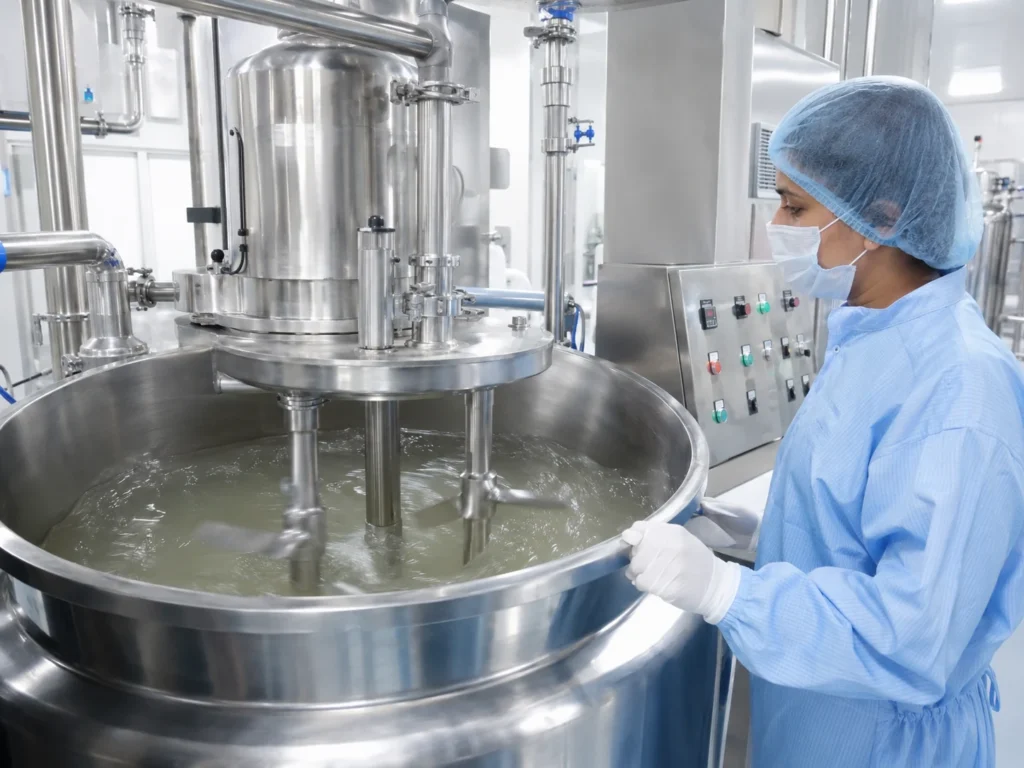
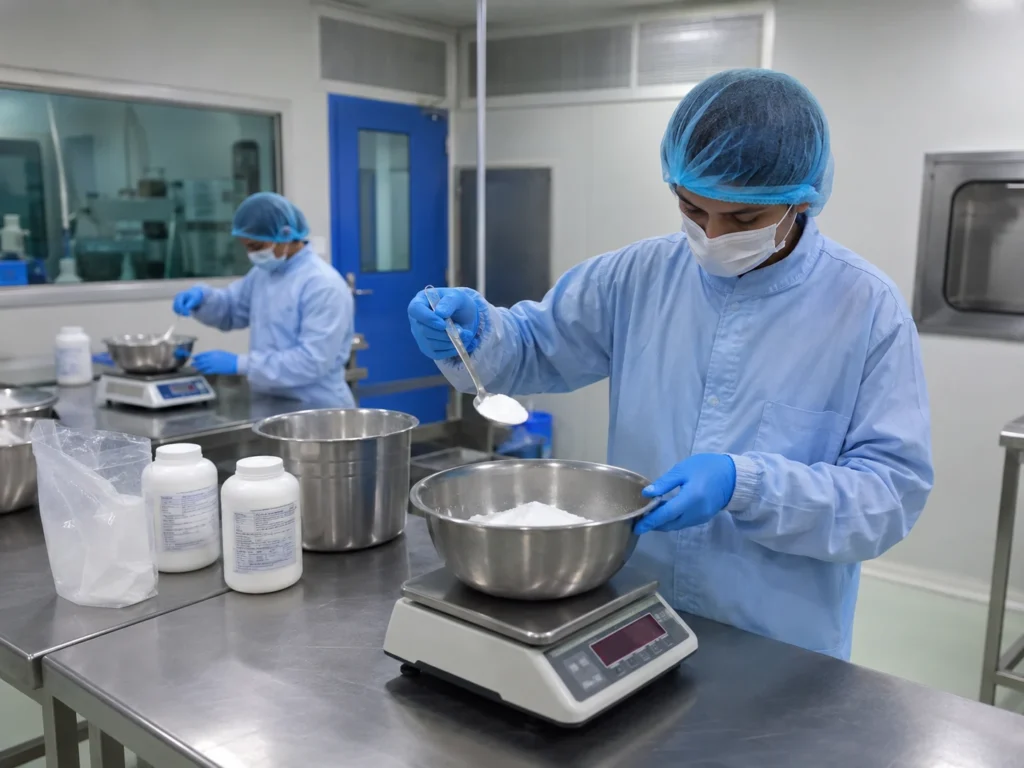
The best prototype is commercially useful only if the manufacturer can reproduce it at the required scale. Shengmei’s oral-film workflow covers raw-material review and weighing, liquid preparation and mixing, dispersion control, coating, controlled drying, winding, slitting, cutting, individual sachet packaging, coding, finished-product review, cartoning and master-carton packing. The exact checkpoints depend on the approved project specification.
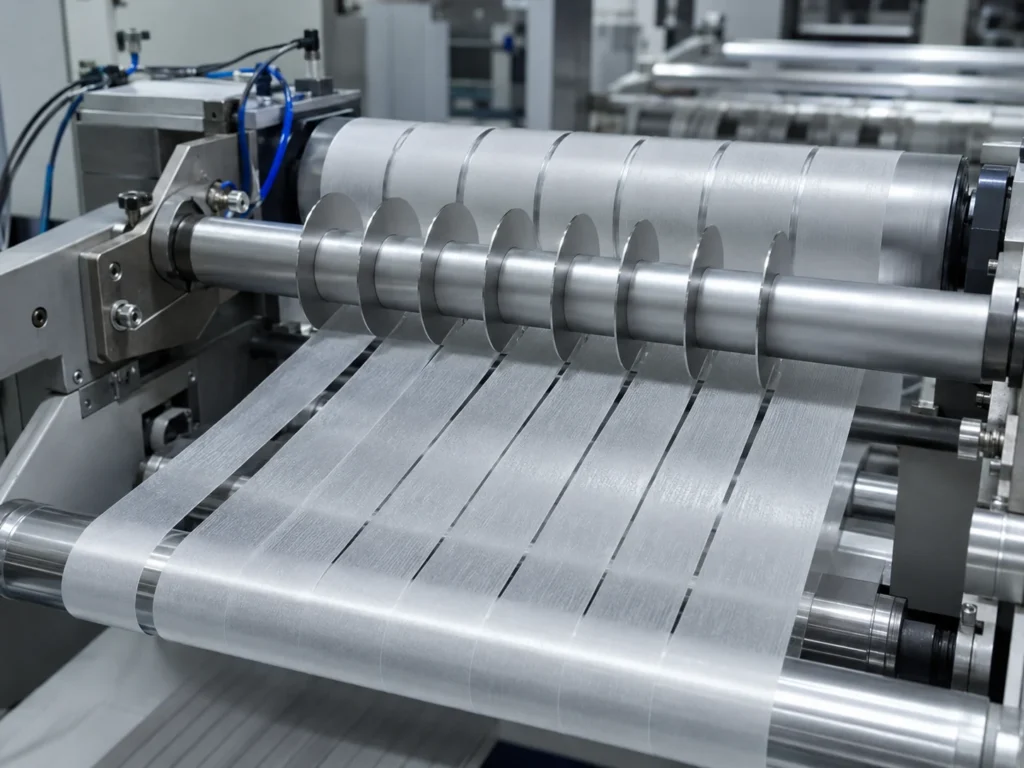
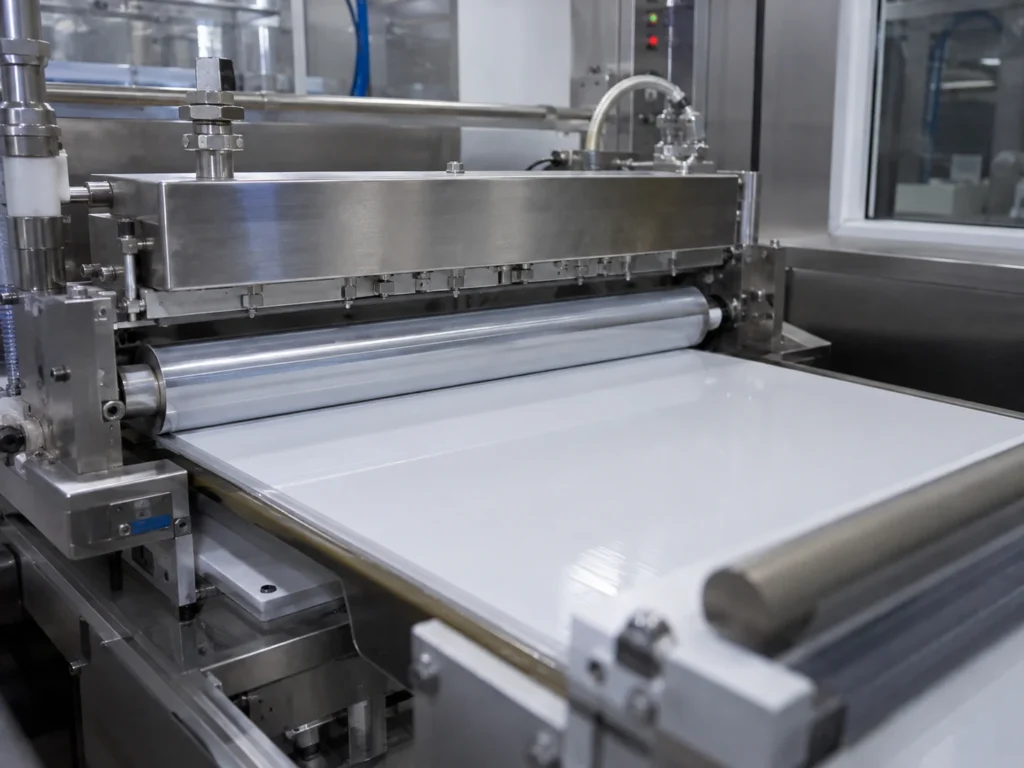
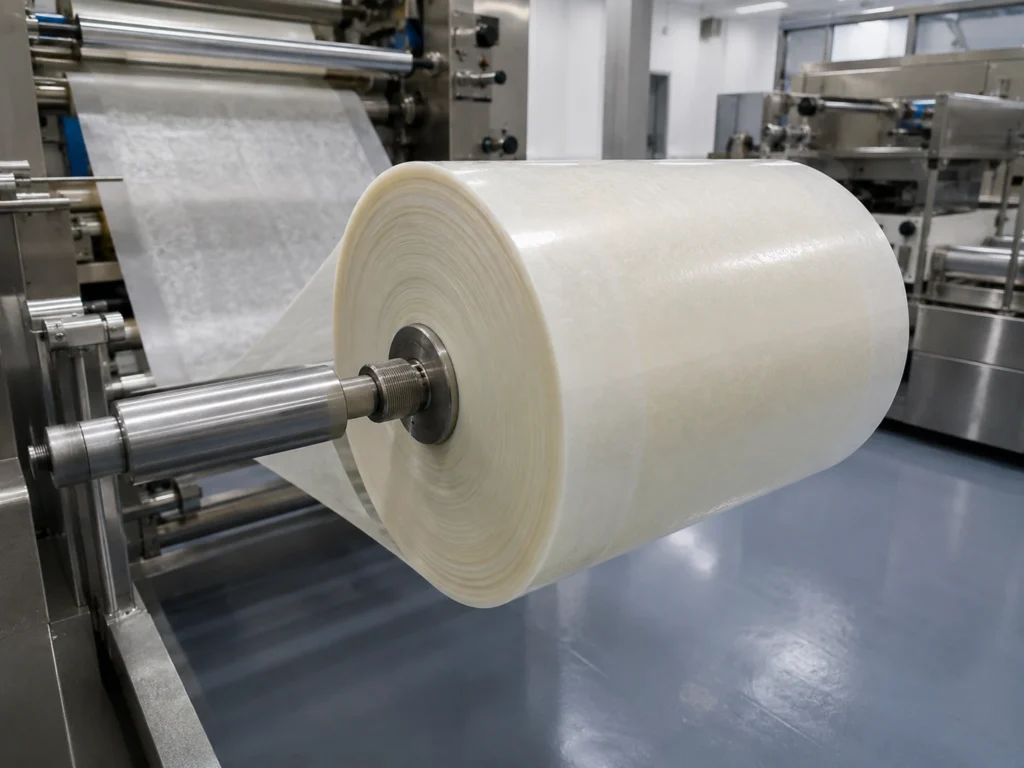
Important scale-up questions include:
- How are incoming ingredients checked against the agreed specifications?
- How is the liquid or suspension kept uniform during processing?
- Which in-process controls cover film thickness, weight or appearance?
- How are strips cut to a consistent size?
- How is moisture managed before and during packaging?
- What finished-product tests are planned for this project?
- How are deviations and out-of-specification results handled?
You should also understand where each step occurs. A supplier may formulate the film but outsource packaging, or coordinate several partners under one quotation. Outsourcing is not automatically a problem, but responsibilities, quality control and communication should be clear.
Review the supplier’s manufacturing facility and production approach and ask for project-relevant evidence rather than relying on a generic equipment list.
Review Shengmei’s oral strip manufacturing capabilities for custom formulation, sampling, packaging and OEM/ODM production.
5. Match Packaging to the Film and Sales Channel
Packaging is part of oral-film performance. Thin films can be sensitive to moisture and physical handling, so the primary pack must be selected alongside the formula—not after the formula is finished.
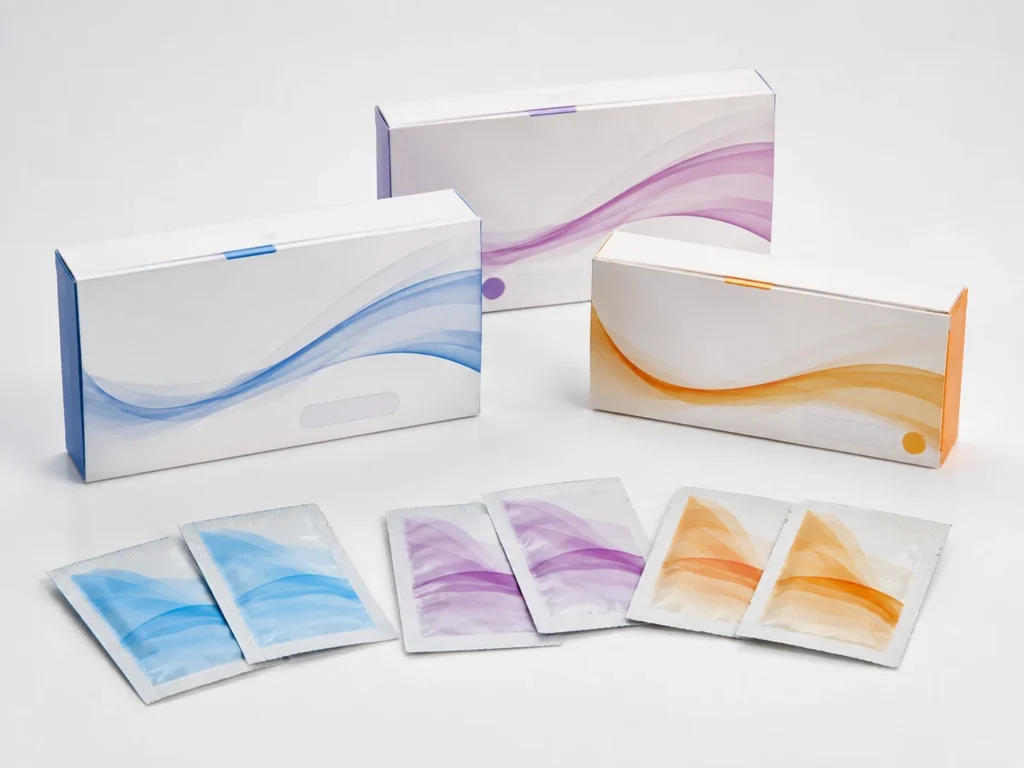
Individual foil sachets are common because they separate the strips and provide a practical barrier. Shengmei projects can be planned around custom printed sachets, retail cartons, 24-strip dispensers, 30-strip cartons, blister-card presentations, hanging cards, display boxes, metal tins, rectangular tins and master cartons. Matte or gloss finishes can be discussed according to the artwork and packaging structure.
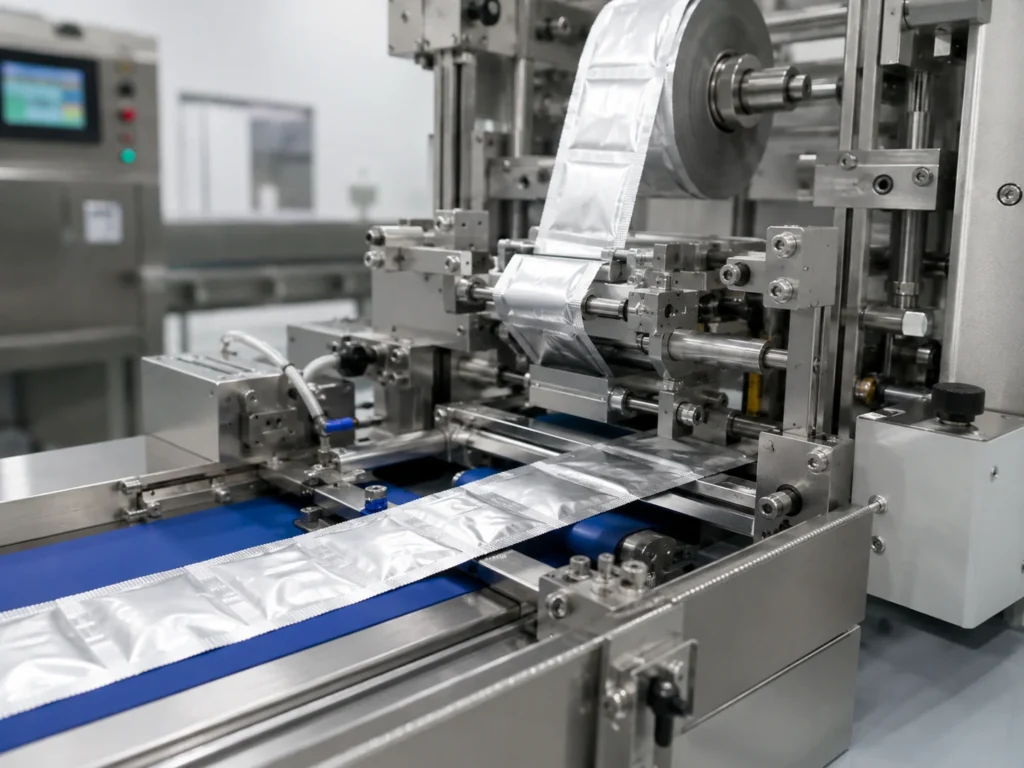
Discuss these details early:
- sachet material and barrier requirement;
- strip and sachet dimensions;
- opening method and ease of strip removal;
- print area, coding and required label information;
- strips per box;
- carton, dispenser or tin structure;
- matte or gloss finish;
- display and master-carton requirements;
- e-commerce shipping durability;
- artwork approval responsibilities.
A premium-looking package is not useful if the strip sticks to the sachet, the seal is inconsistent or mandatory information does not fit. Ask for a dieline and packaging sample where possible, and confirm who checks the artwork against the target-market label requirements.
6. Compare Quality Documentation Carefully
Do not evaluate a manufacturer by the number of certificate logos shown in a sales deck. Ask which documents apply to the facility, which apply to the ingredients and which will be generated for your finished product.
Depending on the project and target market, Shengmei can coordinate a project document package that may include:
- applicable facility and quality-system documents;
- raw-material specifications and supplier documents;
- formula or composition statement;
- finished-product specification;
- certificate of analysis;
- microbiological and heavy-metal testing;
- stability information or a stability plan;
- packaging specifications;
- batch and traceability records;
- Free Sale Certificate and other export or registration documents requested by the importer, subject to the applicable scope.

Availability and scope must be confirmed for each project. A facility certificate does not prove that every formula, claim or label is permitted in every market. The brand owner and importer should verify product classification, ingredient permissions, claims and notification or registration requirements in the destination country.
7. Understand MOQ, Lead Time and Quotation Scope
The lowest MOQ is not always the lowest-risk choice. Buyers should first identify which commercial model the quotation represents.
| Manufacturing route | Best suited to | Main trade-off |
| Ready stock or white label | Faster market testing with an existing product | Limited formula differentiation |
| Private label with modifications | Brands needing selected flavour, pack or formula changes | More development and confirmation work |
| Custom OEM/ODM | A differentiated formula and specification | Higher technical complexity and usually a larger commitment |
| Contract manufacturing | Brands with an established formula and specification | Requires a complete, transferable production brief |
MOQ may be driven by film production, printed sachets, cartons, ingredient purchasing or a combination of these. Ask the manufacturer to separate them. A supplier may be able to make the film at one quantity while the custom packaging printer requires another.
For Shengmei custom oral dissolving film projects, the standard manufacturing MOQ is generally 50,000 strips per formula. For a first custom order, 30,000 strips may be discussed with management, normally at a higher unit price. Ready-stock products follow a different commercial model and should not be compared directly with a fully custom MOQ. Formula complexity, raw materials, printed sachets and retail packaging can still change the final quotation.
The quotation should state what is included: formulation work, samples, raw materials, film production, individual sachets, retail packaging, testing, freight terms and any tooling or artwork charges. Lead time should also be broken into development, sample approval, material purchasing, production, testing and packaging stages. Consider any timeline conditional until the formula, artwork, quantity and documents are confirmed.
8. Use a Supplier Comparison Scorecard
Score each candidate using the same evidence. Weight the categories according to the project instead of allowing a low unit price to dominate the decision.
| Evaluation area | Suggested weight | Evidence to request |
| Formula feasibility | 20% | Written review of active load, taste and film risks |
| Sample quality | 15% | Documented sample versions and evaluation results |
| Manufacturing control | 15% | Process explanation and relevant in-process checks |
| Packaging capability | 15% | Material options, dielines and sample packs |
| Quality documentation | 15% | Project-specific document list and sample formats |
| Commercial fit | 10% | Clear MOQ, quotation scope and payment terms |
| Scale-up and supply | 5% | Production plan and repeat-order approach |
| Communication | 5% | Accurate answers, change control and response quality |
Red flags include instant approval of a technically difficult formula without review, refusal to explain what a sample represents, vague testing language, undocumented changes, universal compliance claims and a quotation that omits primary packaging.
9. Questions to Ask Your Oral Strip Manufacturer
Send the same questions to every shortlisted supplier:
- Have you reviewed the proposed active dose against the target strip size?
- Which ingredients create the greatest solubility, sedimentation, taste or stability risks?
- What can be adjusted if the first formula is too thick or slow to dissolve?
- What sample stages do you offer, and what does each sample prove?
- Which specifications will be fixed before commercial production?
- How do you control mixing uniformity, film thickness, cutting and moisture?
- Which individual sachet and retail packaging formats are available?
- Which documents and finished-product tests are included in the quotation?
- What drives the MOQ for film, printed sachets and cartons?
- What information do you need to provide an accurate timeline and quote?
The quality of the answers is as important as the answers themselves. A suitable partner should identify uncertainties, explain trade-offs and specify what must be tested rather than promising that every request is easy.
10. Frequently Asked Questions
What information should I send for an oral strip quotation?
Provide the target market, ingredient list and dose per strip, flavour direction, desired strip count, packaging preference, estimated quantity, required documents and launch timing. If the formula is not final, state which elements are fixed and which can be adjusted.
Can every supplement formula be converted into an oral strip?
No. Ingredient load, solubility or dispersibility, particle size, taste, colour, stability and the intended strip size can limit feasibility. A manufacturer should review the complete formula before confirming the format.
Should I choose ready stock or a custom oral strip?
Ready stock may suit faster testing and lower-complexity launches. A custom project offers more control over the formula, flavour and product positioning but requires additional development, confirmation and commercial commitment.
Why are oral strips often packed individually?
Individual sachets help separate the strips and can provide moisture and handling protection. The required barrier and material structure should be selected for the specific formula and storage conditions.
How should I compare oral strip MOQs?
Ask what creates each minimum: film production, raw materials, printed sachets, cartons or another component. Shengmei’s standard custom-film reference is generally 50,000 strips per formula, with 30,000 strips potentially available for a first custom order after management review. Compare the total sellable product and included services, not only the number of strips.
What documents should an oral strip manufacturer provide?
The appropriate list depends on the formula, manufacturing arrangement and destination market. Ask for a project-specific list covering facility documents, raw-material records, finished-product specifications, testing, packaging and any importer-requested registration documents.
Planning an oral dissolving film project? Explore our oral strip manufacturing services, then share your target market, formula direction, packaging preference and expected quantity with Shengmei to request an initial manufacturing review.
CONTINUE YOUR PROJECT RESEARCH
Related Manufacturing Resources
Move from this topic into the most relevant Shengmei service, format, factory or inquiry page.
FROM ARTICLE TO ACTION
Start Your Supplement Project
Send your target market, formula direction, dosage form, packaging preference and estimated quantity for review.